

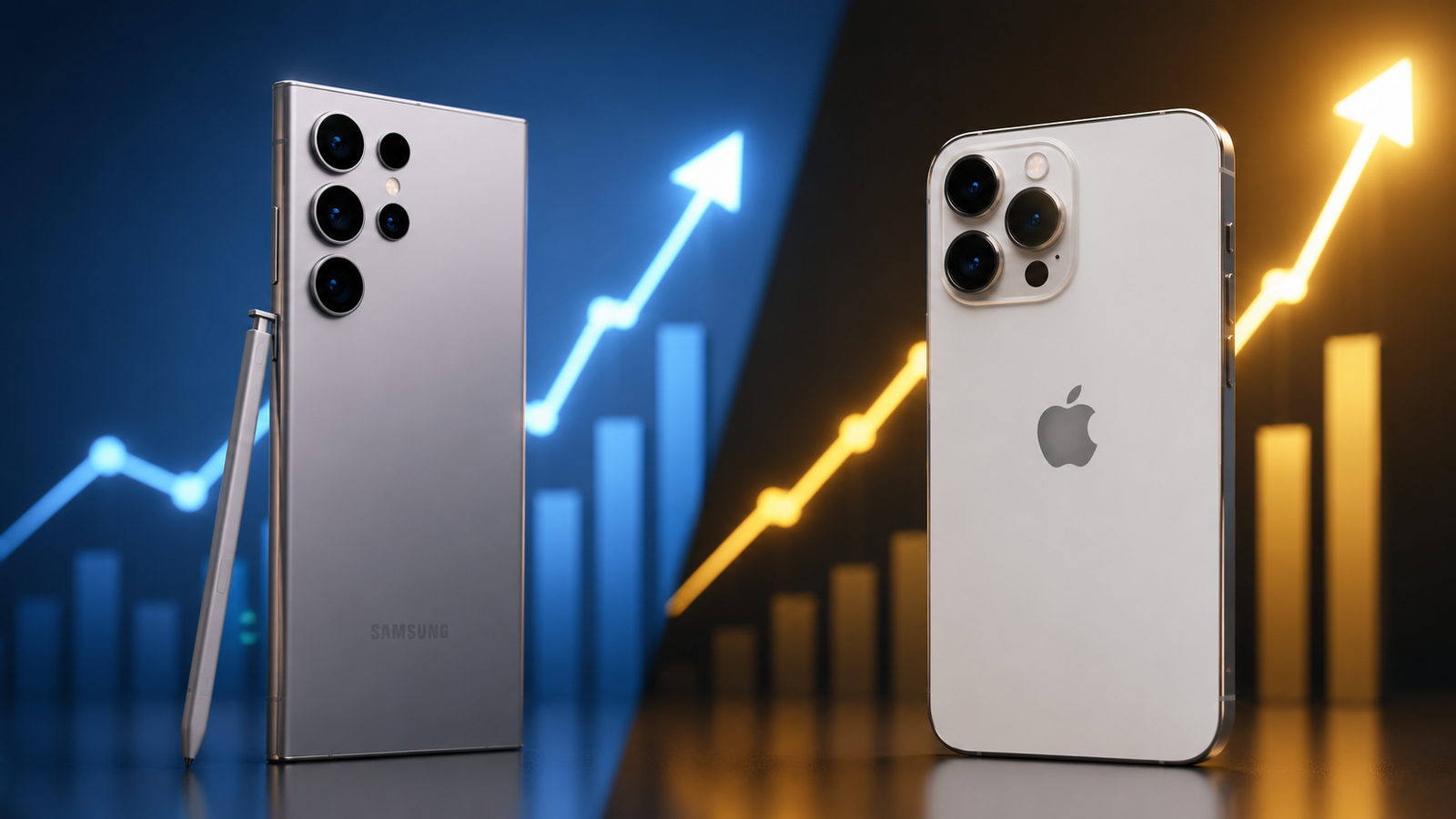
Global smartphone shipments dropped 4% year-on-year in the second quarter of 2026, as an ongoing memory chip shortage continued to drive up component costs across the industry, according to new figures from research firm Omdia.
While the overall market contracted, two brands moved firmly in the opposite direction: Samsung and Apple both expanded their global market share in Q2 2026, widening the gap between themselves and the rest of the industry.
Samsung Holds the Top Spot, Apple Posts Its Best-Ever Q2
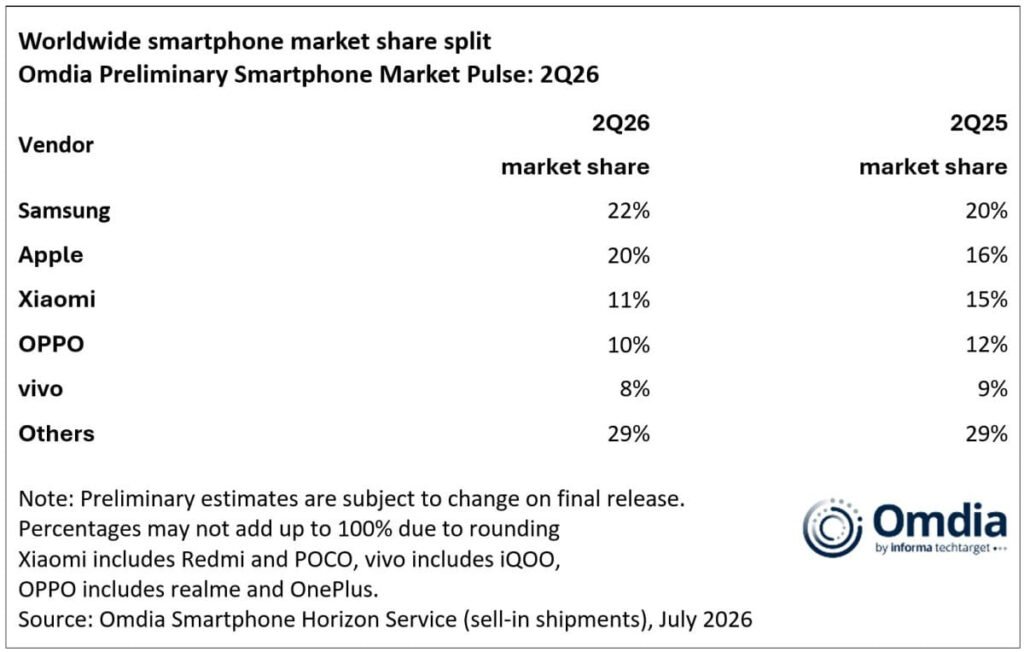
Samsung stayed on top of the global smartphone rankings in the second quarter, growing its market share to 22%, up from 20% in the same period a year earlier. Omdia credited the gain to Samsung’s stronger access to component supply and steady consumer demand, along with additional share picked up in the budget segment as some Chinese competitors trimmed their model lineups and raised prices.
Apple’s gains were even sharper. The company’s global market share jumped from 16% to 20% year-on-year, marking its strongest second quarter on record. Omdia pointed to an unusually strong iPhone 17 upgrade cycle as the main driver, with Apple’s decision to hold prices steady giving it an edge at a time when many competitors were raising theirs.
Chinese Brands Lose Ground
The picture was very different further down the rankings. Xiaomi held on to third place but saw its share slide from 15% to 11% year-on-year. Oppo dropped from 12% to 10% in fourth place, while Vivo rounded out the top five with 8% share, down from 9% a year earlier.
The steepest losses were concentrated among brands that depend heavily on high shipment volumes of affordable devices — precisely the segment being squeezed hardest by rising memory costs.
Budget Phones Bearing the Brunt of the Memory Shortage
According to Omdia principal analyst Runar Bjorhovde, the sharpest shipment declines are showing up in smartphones priced under $400. That segment is facing a combination of tighter supply, thinner profit margins, and buyers who are far more sensitive to price hikes than premium customers.
Memory and storage components now make up more than 60% of the total bill of materials for budget smartphones, Omdia estimates, compared with just over 30% for flagship devices. That imbalance is making it increasingly difficult for manufacturers to hold the line on pricing for entry-level and mid-range phones, even as premium brands like Apple and Samsung remain comparatively insulated.
No Relief Expected Until Late 2027
Omdia does not expect memory prices to begin easing before the second half of 2027 — and even then, prices are unlikely to fall back to pre-2025 levels. As a result, smartphone makers are expected to keep shifting strategy away from chasing shipment volume and toward protecting margins through higher-value devices.
The firm also expects the steepest shipment declines of the year to land in the third and fourth quarters, as the usual seasonal demand from new product launches, holiday sales, and year-end shopping events collides with an increasingly tight memory supply.
For budget-conscious buyers, that could translate into fewer choices, higher prices, and longer waits for deals. Analysts expect more shoppers to turn to installment financing or refurbished devices as new budget and mid-range phones become harder to find at older price points.




Leave a Reply