

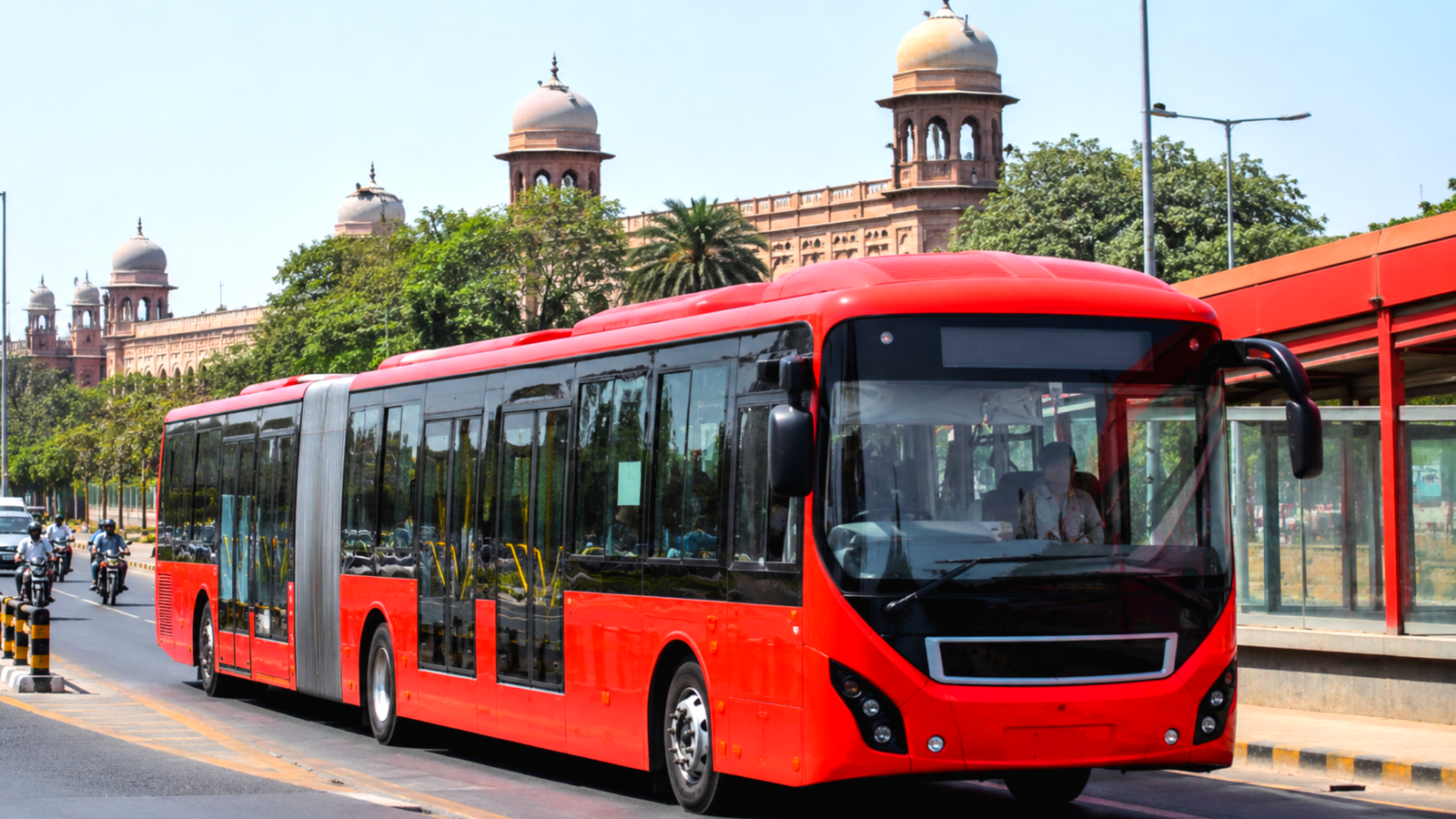
Lahore’s Metro Bus Service is set to go off the road from August 11 after its private operator told the Punjab Mass Transit Authority (PMA) it can no longer run the 27-kilometer Gajjumata-Shahdara route without fuel supplied directly by the authority.
VEDA, the company operating the service, issued a final notice to the PMA saying it had exhausted its financial resources and would suspend all operations on the deadline unless fuel was provided immediately. The notice invoked a July 29 court order that had directed the PMA to arrange fuel from its own sources — a ruling the company says has still not been carried out.
According to the notice, a meeting between VEDA and PMA officials on August 6 did not resolve the standoff. The company said service would remain suspended until the PMA complied with the court’s directive, effectively tying the fate of the bus route to a legal order the authority is contesting rather than implementing.
ALSO READ:
Omoda 7 PHEV Officially Launched in Pakistan: Price, Specs and Features
Why the Operator Says It Can No Longer Continue
A senior company official said sharply higher diesel prices have driven up operating costs beyond what the current fuel reimbursement arrangement covers. Under that formula, the official said, VEDA is reimbursed for fuel expenses after the fact, but the payments no longer match what the company actually spends to keep buses running.
The gap, according to the official, has forced VEDA to draw on its own funds and take on borrowing simply to keep the service operating in recent months. That, the company argues, is unsustainable, and the July 29 court order — which shifts responsibility for arranging fuel onto the PMA itself, rather than reimbursing the operator later — was meant to address exactly that problem.
VEDA’s position is that the order should already be in effect. Its notice makes clear the company sees the August 11 deadline not as a new demand, but as the point beyond which it says it is no longer able to absorb the shortfall on its own.
The PMA’s Position
A senior PMA official confirmed the dispute exists but offered a different account of where things stand. The official said the authority has challenged the July 29 court order rather than accepting it, and plans to invoke a provision in its contract with VEDA that allows either side to request arbitration to settle disagreements of this kind.
The same official acknowledged a practical constraint behind the standoff: the PMA cannot supply fuel to the operator without approval from the provincial government first. That approval, based on the notice and the PMA’s own account, had not been granted as of the company’s final warning — leaving the authority unable to meet the court’s order even if it were inclined to comply immediately.
To guard against a total shutdown, the PMA official said the authority has arranged for buses from outside the existing Metro Bus fleet that could be deployed to maintain some level of service if VEDA halts operations on August 11. No further details were given on how many buses this would involve or which parts of the route they would cover.
A Dispute Over Who Pays — and How
At its core, the disagreement is about which party absorbs the cost of rising fuel prices under a public-private transit arrangement. VEDA says the existing reimbursement model has fallen behind actual diesel costs and wants the PMA to supply fuel directly, as the court has ordered. The PMA, for its part, is not disputing that a cost problem exists, but is resisting the specific remedy the court has imposed, preferring instead to route the disagreement through contractual arbitration.
That difference matters for how quickly the matter can be resolved. Arbitration and legal challenges to a court order typically take time, while VEDA’s deadline is four days away from the date of its notice. Unless the government approval the PMA says it needs is granted before then, or the two sides reach an interim arrangement, the gap between the legal process and the operational deadline is likely to determine whether buses run on August 11.
What It Means for Commuters
The Gajjumata-Shahdara corridor carries a significant share of Lahore’s daily bus commuters, and a suspension would leave regular riders without their usual route until the dispute is settled. Neither side has said how long a shutdown might last if VEDA does stop operations, since resolution depends on developments — government approval, an arbitration outcome, or a court ruling — that had not occurred as of the notice.
The PMA’s contingency plan to bring in outside buses suggests the authority is preparing for the possibility that the suspension goes ahead rather than assuming the dispute will be settled in time. Whether that stopgap measure can match the capacity of the regular Metro Bus fleet has not been detailed.
What Happens Next
The immediate questions are whether the Punjab government grants the PMA approval to fund fuel supply before August 11, whether the authority’s challenge to the July 29 court order succeeds, and whether arbitration proceeds in parallel with or instead of compliance. VEDA has given no indication it will extend the deadline, and the PMA has not said when its challenge to the court order will be heard.
For now, both sides describe the matter as unresolved. The company has reserved the right to pursue further legal and contractual remedies, while the PMA has confirmed it intends to use the arbitration clause in its agreement with the operator. Until one of those tracks produces an outcome, the August 11 deadline stands as the operative date for Lahore’s Metro Bus service.









Leave a Reply