

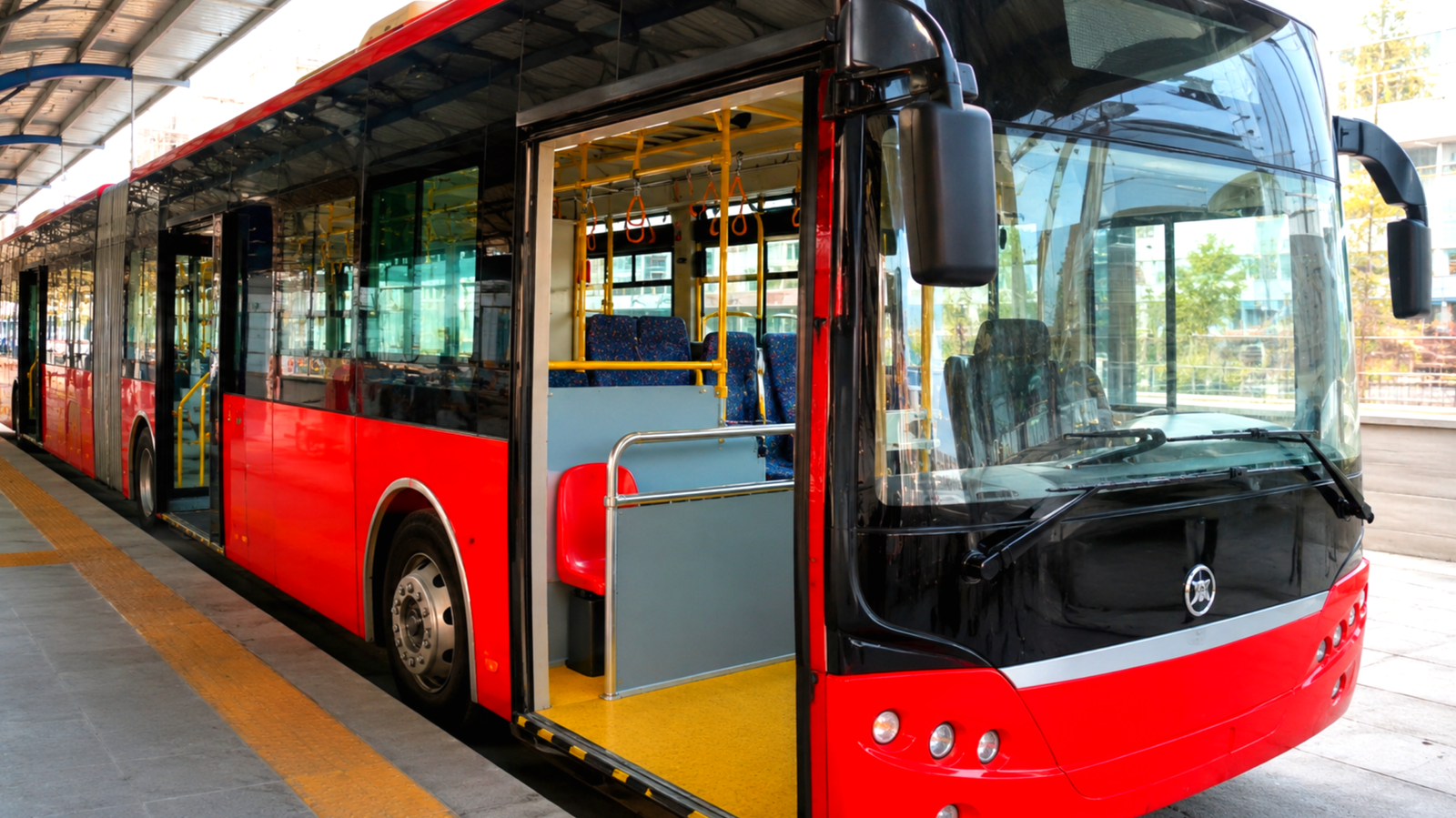
ISLAMABAD — The Punjab Mass Transit Authority (PMA) has installed a physically partitioned section for women and children aboard buses on the Rawalpindi-Islamabad Metrobus system, the agency said this week, in a change aimed at improving privacy and comfort for passengers on one of Pakistan’s busiest bus rapid transit corridors.
The authority announced the measure through its official social media channels rather than a formal press briefing. Images released by PMA show a physical barrier installed inside the bus cabin, separating a compartment marked “Women and Children Only” from the rest of the vehicle. PMA said the change is intended to improve privacy, passenger comfort, in-transit safety, and general organization inside the buses.
What Changed
Metrobus vehicles previously set aside a block of seating near the front of each bus for women, a practice common across Pakistani public transport. The new arrangement replaces that informal reservation with a fixed physical divider, creating a clearly delineated section rather than a seating preference that depended on other passengers voluntarily giving way.
PMA has not published a schedule detailing how many buses in its fleet have been retrofitted with the partition or when conversion of the remaining vehicles will be completed. The authority has also not disclosed the cost of the modification or identified the contractor carrying out the work.
The change currently applies to the Rawalpindi-Islamabad Metrobus corridor, which is operated jointly by PMA, the Capital Mass Transit Authority (CMTA), and the Capital Development Authority (CDA) in Islamabad as part of the wider Punjab mass-transit network.
System Background
The Rawalpindi-Islamabad Metrobus opened in June 2015, when then-Prime Minister Nawaz Sharif inaugurated the corridor connecting the twin cities. The project was built to address chronic overcrowding on the private vans and minibuses that served the route beforehand, a problem officials said at the time disproportionately affected women, the elderly, and students.
A decade later, the network has grown from a single corridor into four lines — Red, Orange, Green and Blue. The Red Line, the system’s original route, covers roughly 23 kilometers between Pak Secretariat in Islamabad and Saddar in Rawalpindi across 24 stations, 14 of them at-grade and 10 elevated. The Orange Line runs about 25.6 kilometers along the Kashmir Highway corridor to New Islamabad International Airport. The system currently operates a fleet of 99 buses between 6:15 a.m. and 10 p.m., with Red Line buses dispatched roughly every three minutes at peak frequency, Orange Line buses every five to ten minutes, and Green and Blue Line buses at six-minute intervals. Combined ridership on the Red and Orange lines has been reported at more than 120,000 passengers a day, with the system recording a peak of about 151,000 riders in a single day since opening. Fares are collected via token or a reloadable Metrobus card, with the base fare currently around Rs 40 per journey.
In late 2022, the CDA commissioned Pakistan’s National University of Sciences and Technology (NUST) to carry out a feasibility study for additional routes. That study identified 13 further corridors intended to extend metro bus service across more of Islamabad, though PMA has not set a construction or opening timeline for them.
PMA also operates bus rapid transit systems in other Punjab cities, including Pakistan’s first such corridor in Lahore, which opened in 2013, and a Multan line that began service in 2017.
Part of a Broader Pattern
The women-and-children partition follows a series of recent changes across Punjab’s public transport network aimed specifically at female commuters. In late 2025, Punjab authorities launched an electric bus service in Rawalpindi, running an initial fleet of 45 electric buses across four routes under a plan that will eventually expand to 80 vehicles, with similar services planned for Jhelum, Chakwal and Attock. On that service, women, students, senior citizens and persons with disabilities travel free of charge, while other passengers pay a flat Rs 20 fare; the buses carry air conditioning, CCTV cameras, Wi-Fi and charging ports.
Elsewhere in the province, the Lahore Metro Bus system was reported this week to be at risk of a temporary suspension over an unresolved dispute involving fuel supply — a reminder that service upgrades on one corridor do not necessarily reflect the operational or financial condition of the wider network PMA oversees.
Consumer Impact
For the more than 100,000 people who use the Rawalpindi-Islamabad Metrobus daily, the partition is a modest physical change rather than a shift in routes, fares or schedules. Surveys conducted around the system’s 2015 launch had found that more than 90 percent of commuters were dissatisfied with the private van and minibus services the Metrobus replaced, citing overcrowding and inconsistent treatment of women and other vulnerable passengers as recurring complaints. Public transport has since become a significant mode of travel for women in the twin cities, including students and working commuters who use the system for daily journeys.
Whether the new partition meaningfully changes that experience will likely depend on enforcement rather than the physical modification itself. A reserved section functions as intended only if it remains accessible to women and children during the system’s busiest hours, when overall ridership pressure — and demand for space throughout the bus — is highest. PMA has not detailed accompanying enforcement measures, such as staff monitoring or signage requirements, beyond the partition itself.
Outlook
PMA has not said whether it plans to extend the partitioned section to the Orange, Green and Blue lines, or whether the design will be built into buses serving any of the 13 additional routes identified in the 2022 NUST feasibility study. The authority has also not indicated whether the change will be paired with other measures, such as dedicated staff or awareness campaigns, that have accompanied similar initiatives elsewhere on Pakistan’s public transport network.
For now, the modification is an incremental adjustment to a decade-old system that remains among the busiest urban transit corridors in the country, rather than a structural overhaul of how the Rawalpindi-Islamabad Metrobus operates.






Leave a Reply