

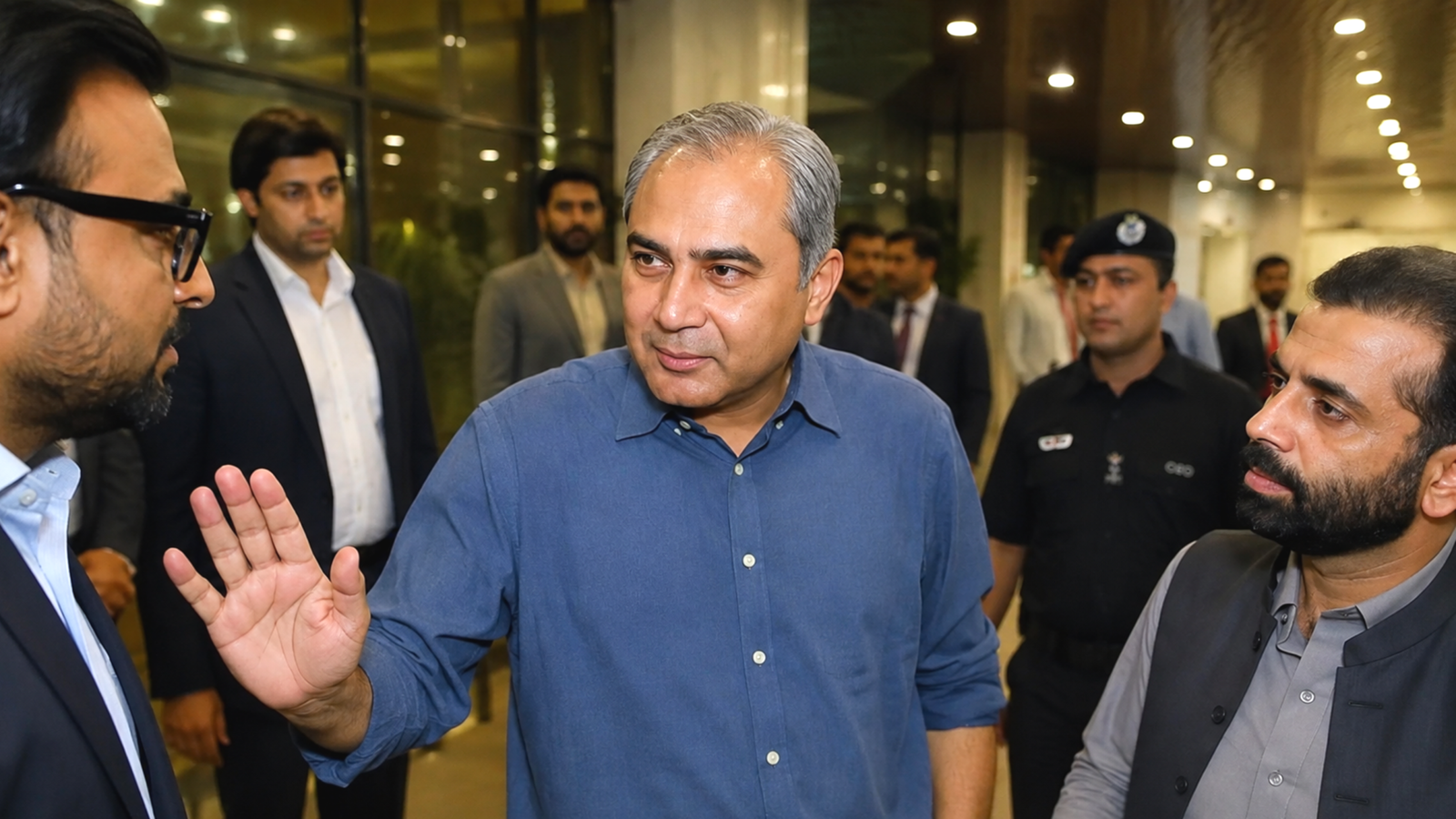
Interior Minister Mohsin Naqvi said this week that Prime Minister Shehbaz Sharif will remain in office for the government’s full constitutional term, pushing back against a fresh wave of speculation about the coalition’s stability. Speaking to reporters and in a separate interview with Geo News on Wednesday, Naqvi said the ruling setup was “not going anywhere” and that talk of an early exit had no basis.
The remarks come at a tense moment for the PML-N-led coalition, which governs with outside parliamentary support from the Pakistan Peoples Party (PPP) rather than a seat at the cabinet table. That arrangement has come under visible strain over disputed elections in Azad Jammu and Kashmir (AJK), giving Naqvi’s comments an added edge beyond routine political reassurance.
What Naqvi Said
Naqvi told reporters the government would complete its five-year constitutional term and that Sharif would stay on as prime minister for the duration, regardless of how his own recent remarks on governance had been interpreted. He credited Sharif with a heavy workload, saying the prime minister typically puts in 14 to 16 hours a day, and argued that outcomes would improve sharply if the wider system of governance improved alongside him.
The interior minister also pointed to what he described as gains under the current government, including revenue reforms at the Federal Board of Revenue, a military success, and diplomatic progress, achievements he said had come despite what he called a fundamentally flawed administrative structure. He did not elaborate on specific figures or timelines for those claims.
Separately, Naqvi renewed a call for an independent, third-party performance review of every federal ministry, with the results made public. He said he was answerable only to the prime minister for his own ministry’s performance and welcomed a similar audit of the Interior Ministry, adding that his attendance at cabinet meetings stood at roughly 70 percent, a figure he cited after facing criticism over his participation.
Why the Timing Matters
A senior cabinet minister publicly ruling out an early transition is not, by itself, unusual in Pakistani politics. What made Naqvi’s comments notable this week was the backdrop: a coalition partner openly questioning the government’s durability, and a governance debate that Naqvi himself had set in motion just days earlier.
For investors and businesses tracking Pakistan’s economy, still stabilizing under an ongoing International Monetary Fund programme, a public commitment from a senior minister to political continuity carries weight even when it settles nothing definitively. Currency markets, bond yields, and foreign investment decisions in Pakistan have historically been sensitive to signals about government stability, making statements like Naqvi’s part of the broader information investors weigh alongside fiscal data.
Root of the Speculation
The current round of uncertainty traces back to two separate threads that converged over the past two weeks.
- Naqvi’s own remarks at the Economic Summit 2026, where he said the system Pakistan operates under “has collapsed” and endorsed a proposal by Dunya Group chairman Mian Amer Mahmood to create new administrative units, arguing that governance, justice, and public services needed to move closer to citizens.
- A rigging dispute in the AJK Legislative Assembly elections, where the PML-N won a simple majority, 23 of 45 seats, according to Prime Minister’s Adviser on Political Affairs Rana Sanaullah, while the PPP disputed the results and accused its coalition partner of manipulating the vote, particularly in the first-phase Mirpur contest, which the PML-N won 9 seats to 4.
PPP chairman Bilawal Bhutto Zardari responded to the AJK results with a series of public warnings, telling the PML-N that the federal government’s “countdown” had begun and that any attempt to defend the results through the courts would trigger a wider political reckoning. He has since announced a rally in Bagh on August 10 as the PPP continues to contest the AJK outcome.
Naqvi’s comments were widely read as an attempt to contain both threads at once, distancing himself from suggestions that his own governance critique amounted to a warning about the government’s survival, while directly countering Bilawal’s language about a coalition on borrowed time.
A Government With a Fragile History to Overcome
Pakistan’s political history gives the speculation some natural traction. No prime minister has completed a full, uninterrupted five-year elected term since the country’s founding in 1947. Sharif himself led a shorter, 16-month administration between April 2022 and August 2023 after Imran Khan’s removal in a no-confidence vote, an assembly term he saw through to its scheduled end, though it fell well short of a full five-year tenure. Pakistan has had roughly 30 different prime ministers since independence, several serving only weeks or months before dismissal, military intervention, or resignation.
Sharif returned to the office in March 2024 after that year’s general election, meaning his current term is scheduled to run until 2029 if completed. Naqvi’s assurance this week amounts to a bet against a pattern that has held for nearly eight decades, at a moment when his own coalition’s internal cohesion is being tested in public.
What Comes Next
The immediate flashpoint remains AJK, where the PPP has signaled it will keep pressing its rigging allegations through rallies and public statements rather than let the dispute settle quietly. How the PML-N and PPP leadership manage that disagreement in the coming weeks, without formal cabinet ties binding the two parties together, will likely say more about the coalition’s actual durability than any single statement from Naqvi.
On governance, Naqvi’s proposal for third-party ministry audits now sits with the prime minister’s office, with no public timeline yet for whether it will be adopted. His earlier call for new provinces or administrative restructuring, the remarks that helped set off this round of speculation, has not been taken up as formal government policy, and it remains unclear whether it will feature in any upcoming cabinet or parliamentary discussion.
For now, the government’s public position is unambiguous: no early transition, no change in leadership, and a prime minister its own interior minister insists is going the distance. Whether the coalition’s internal politics allow for that remains the open question heading into the rest of 2026.




Leave a Reply