

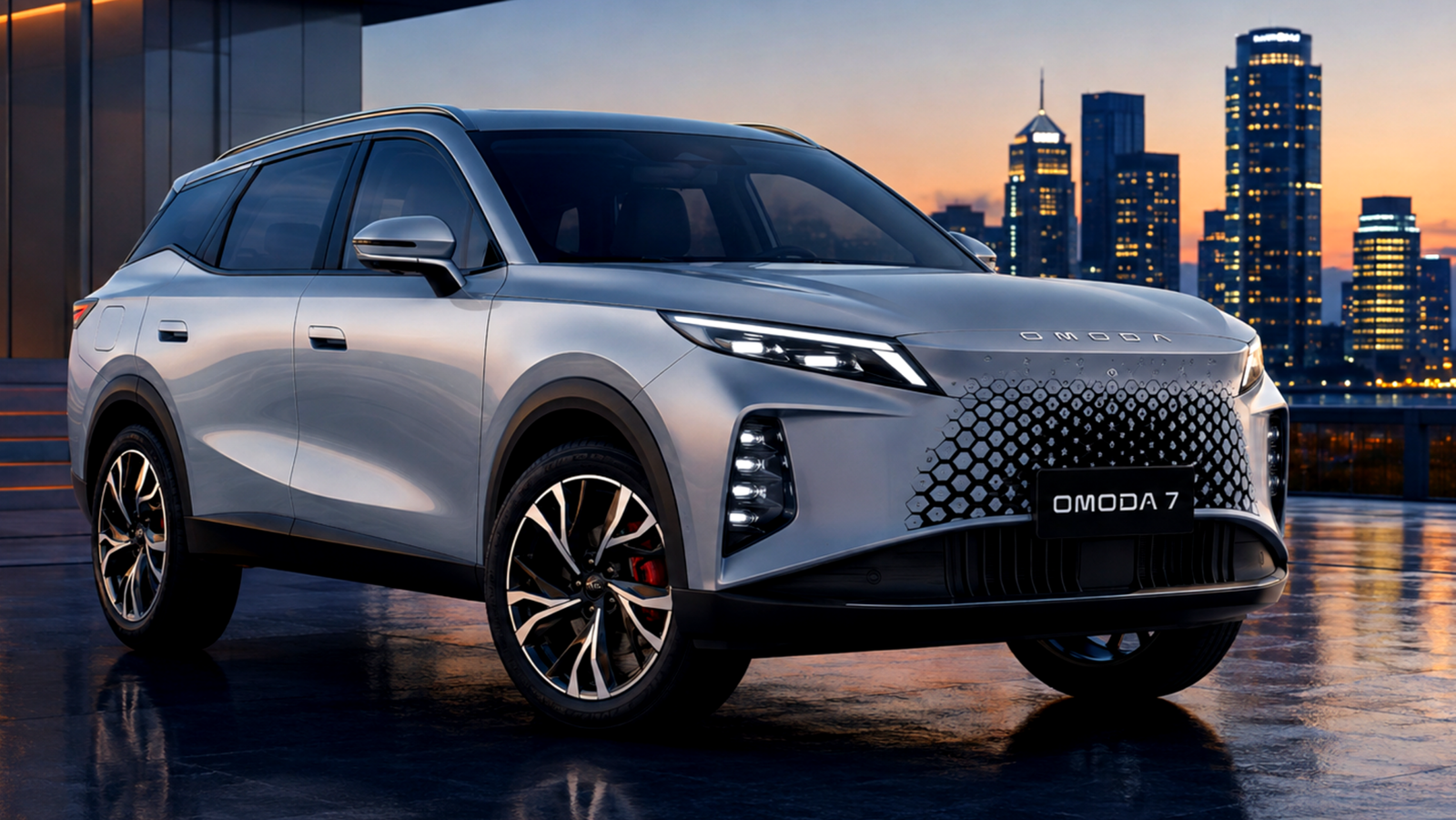
LAHORE, Aug. 8 — Omoda & Jaecoo Pakistan opened bookings Friday for the Omoda 7 SHS-P, a plug-in hybrid SUV priced from 10,649,000 rupees (roughly $38,300) under an introductory offer, the company’s fifth new-energy vehicle launch in Pakistan in under a year.
The SUV is imported and marketed by NexGen Auto, a unit of Nishat Motor Company, the Lahore-based group that also distributes Hyundai vehicles in Pakistan through a separate venture. It goes on sale in a single trim, designated “Premium,” with a 2,000,000-rupee booking deposit and first deliveries scheduled for September, the company said.
The Omoda 7 was shown publicly earlier this year at the Beijing auto show as part of Chery Group’s broader electrified-SUV push, before Omoda & Jaecoo Pakistan unveiled the model locally on July 31 without pricing. The company disclosed pricing, booking terms and delivery timing a week later, following the earlier local introductions of the Jaecoo J5, J6 and J7 and the Omoda E5 electric crossover.
Pricing and Booking
The Omoda 7 Premium’s 10,649,000-rupee ex-factory price applies under a price-lock offer that NexGen Auto has said will run through Aug. 31. The company has not said what the price will be once the offer lapses. Customers can reserve a unit with a 2,000,000-rupee deposit, and deliveries against early bookings are expected to begin in September.
NexGen Auto is offering a six-year or 150,000-kilometer warranty on the vehicle and a separate eight-year or 160,000-kilometer warranty on the battery pack.
Powertrain, Battery and Range
The Omoda 7 SHS-P — Super Hybrid System Plug-in, in the company’s own naming convention — combines a 1.5-liter turbocharged four-cylinder engine with an electric motor, an 18-kilowatt-hour lithium iron phosphate battery and a Dedicated Hybrid Transmission driving the front wheels. NexGen Auto rates combined output at 340 horsepower (255 kilowatts) and 525 newton-meters of torque.
The company said the SUV can travel more than 90 kilometers on battery power alone under the WLTP test cycle, and that combined range on a full charge and a full tank reaches approximately 1,200 kilometers. NexGen Auto also cited a combined fuel-consumption figure of 4.9 liters per 100 kilometers. These figures reflect manufacturer testing and have not been independently verified by Pakistani regulators.
The powertrain configuration mirrors that of the Jaecoo J7 SHS and the Chery Tiggo 7 PHEV, both built on related Chery Group architecture sold across overlapping markets.
Design, Cabin and Technology
Exterior equipment includes LED headlights and daytime running lights set into a grille without a conventional border, 20-inch alloy wheels, flush door handles, roof rails, a panoramic sunroof and full-width LED taillights. The tailgate is power-operated, and the rear seats fold in a 60:40 split to extend cargo space. The SUV retains a full-size spare wheel, a component some competing plug-in hybrids omit in favor of a repair kit to free up space for battery hardware.
Inside, the cabin uses leatherette, suede upholstery and wood trim across the dashboard and door panels. The instrument panel pairs an 8.8-inch digital gauge cluster with a 15.6-inch touchscreen — which the company calls its “Glide” display — that slides horizontally toward the front passenger, along with a head-up display and wireless Apple CarPlay and Android Auto support. Other equipment includes a 12-speaker Sony audio system, 50-watt wireless phone charging, a built-in cabin fragrance dispenser and multi-color ambient lighting, run through a Snapdragon 8155 processor.
The driver’s seat has 10-way power adjustment, memory settings, heating and ventilation. The front passenger seat has a reclining function the company markets as “zero-gravity,” paired with a built-in massage feature.
Safety and Driver-Assistance Systems
The Omoda 7 comes with eight airbags, a 360-degree camera system and what NexGen Auto describes as Level 2 driver-assistance capability. The package includes adaptive cruise control, automatic emergency braking, lane-keeping assist, blind-spot monitoring, rear cross-traffic alert, front and rear collision warnings, a door-opening warning and driver-fatigue monitoring.
Market Positioning
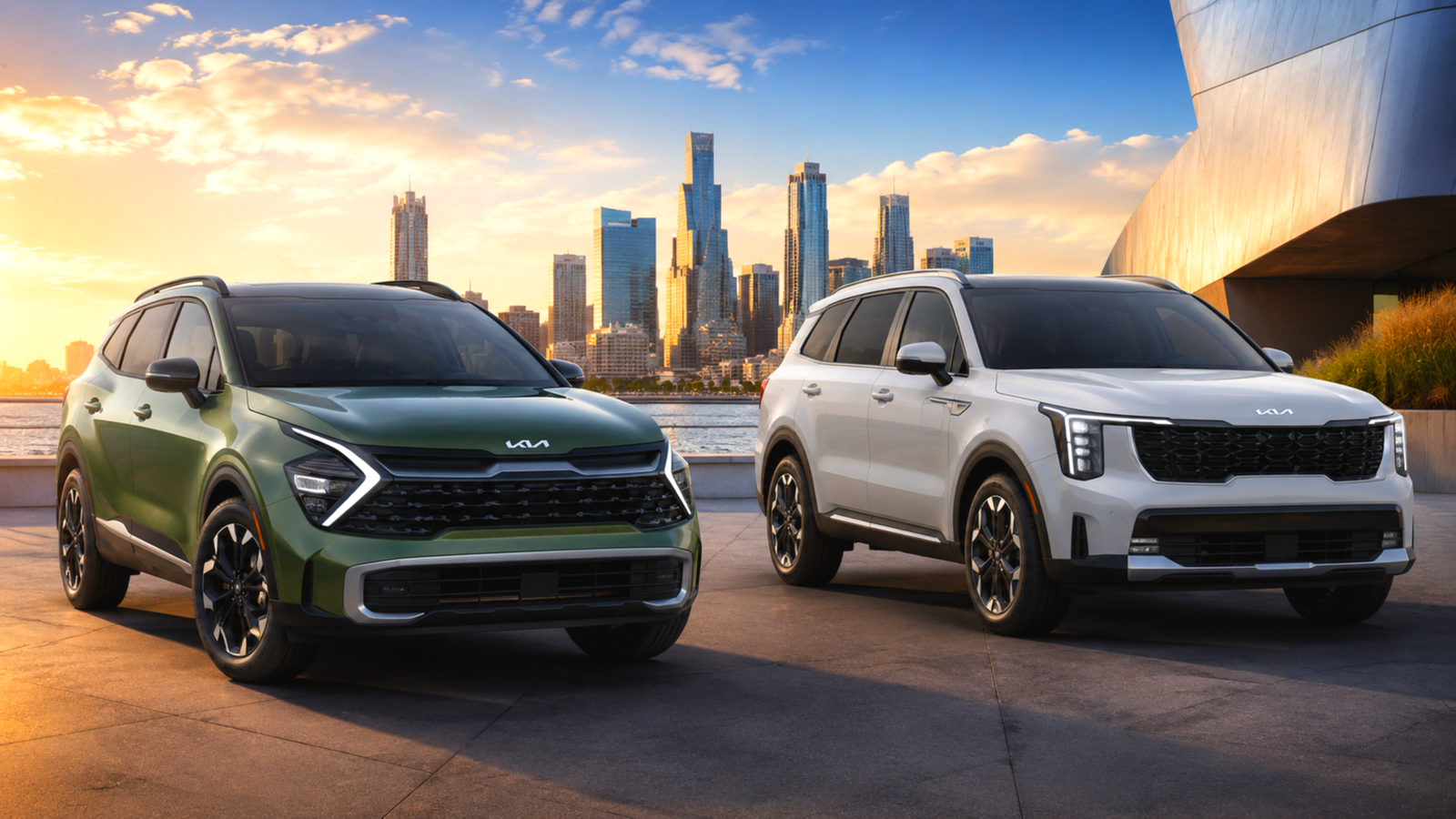
The Omoda 7 enters a plug-in hybrid SUV segment in Pakistan that has grown crowded within the space of a year. Its closest competitor on paper is the Jaecoo J7 SHS, a sibling model under the same Chery Group ownership that uses the same 1.5-liter plug-in hybrid powertrain and is priced at 10,499,000 rupees — about 150,000 rupees below the Omoda 7’s introductory price. Outside the Chery-linked lineup, the Haval H6 PHEV competes in a similar size class at 12,895,000 rupees, more than 2 million rupees above the Omoda 7’s launch price. MG and Kia have also brought hybrid or plug-in hybrid SUVs to the Pakistani market in recent months, part of a broader shift by multiple brands toward electrified SUVs in a segment historically dominated by conventional gasoline engines.
Industry Background
NexGen Auto’s rollout under Nishat Motor Company has been among the more active new-energy vehicle programs among Pakistani distributors aligned with Chinese automakers, adding five models — the Jaecoo J5, J6 and J7, the Omoda E5 and now the Omoda 7 — since its NEV push began less than a year ago. The company has said it plans to expand dedicated Omoda and Jaecoo dealership networks in major cities as the lineup grows.
The launch comes as Islamabad works on a successor to the Automotive Industry Development and Export Policy, which runs through 2026 and currently taxes plug-in hybrids at a sales tax rate of 8.5%, compared with the standard 18% levy on most conventional vehicles. Industry officials have said the next policy phase could adjust tax treatment for what regulators classify as new-energy vehicles — a category spanning battery-electric, plug-in hybrid, range-extended and fuel-cell models — though no final rates had been announced as of the Omoda 7’s launch. Pakistani parts vendors have separately raised concerns that extending similar tax incentives to imported plug-in hybrids could weaken the case for localizing component production domestically, an argument that has featured in the broader policy debate over the past year.
Consumer Impact
The Omoda 7’s pricing places it within a bracket that overlaps with higher-specification conventional SUVs from established Japanese and Korean brands, at a time when fuel costs remain a significant part of household vehicle budgets in Pakistan. A claimed 90-kilometer electric-only range would cover most daily driving in cities such as Lahore, Karachi and Islamabad without engaging the gasoline engine, provided owners have regular access to charging — infrastructure that remains limited outside major urban centers.
Selling the model in a single, fully equipped trim simplifies the purchase decision relative to rivals offered across multiple grades, though it also leaves no lower-priced entry point into the nameplate for more budget-conscious buyers.
Outlook
The September delivery target will offer an early indication of how quickly NexGen Auto can convert bookings into registered vehicles, a pace that has varied across the company’s earlier NEV launches. With the price-lock offer set to expire Aug. 31, prospective buyers have a limited window to book at the introductory rate before any adjustment takes effect. How demand holds up once that window closes, and how Jaecoo, Haval, MG and other rivals respond, is likely to shape the next stretch of competition in Pakistan’s plug-in hybrid SUV segment.





Leave a Reply