

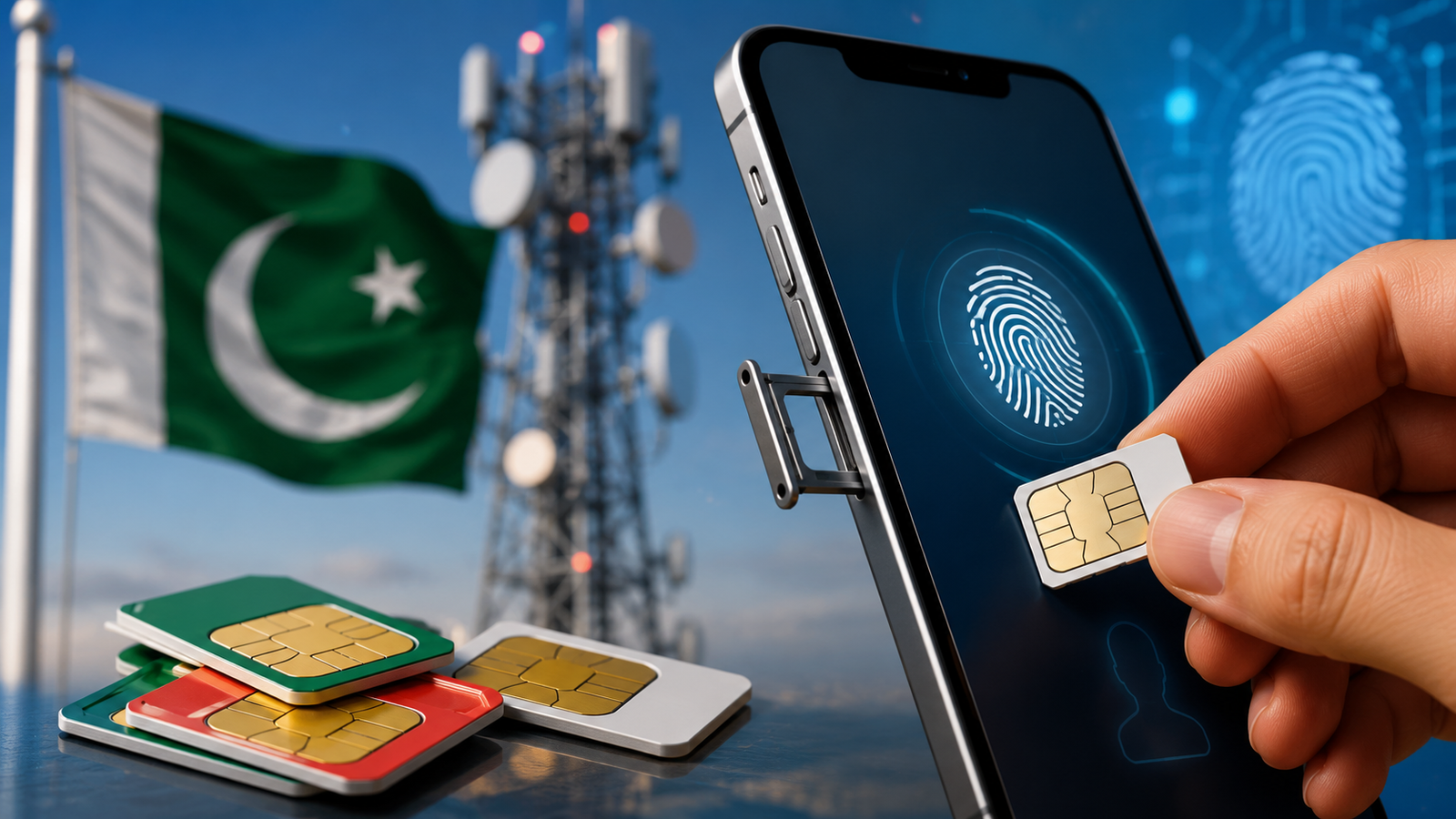
Islamabad: The Pakistan Telecommunication Authority (PTA) has tightened regulations governing the sale and issuance of SIM cards across the country, directing all mobile network operators to guarantee that every SIM sold through their networks is properly verified and legally issued.
In fresh instructions sent to telecom companies, the regulator made it clear that operators will now be held directly responsible for any unauthorized or illegal SIM sales carried out through their franchises, retailers, or sales channels. The move signals a tougher compliance regime for an industry that has long struggled with fraudulent SIM issuance and identity misuse.
Only Authorized Outlets Can Issue SIMs
Under the new directives, SIM cards can only be issued through authorized customer service centres, franchises, and approved outlets. Operators have also been told to assign every sales representative a unique identification number, making it possible to trace any SIM back to the specific staff member who issued it.
This requirement is designed to close a long-standing loophole in which unregistered or unauthorized agents sold SIMs without proper checks, often enabling fraud, robocalls, and identity theft.
Biometric Verification Now Mandatory for More Services
New SIM activation will only be allowed after successful biometric verification of the customer through NADRA’s Biometric Verification System (BVS), using the applicant’s original national identity card (CNIC).
Crucially, PTA has expanded the scope of mandatory biometric verification beyond fresh SIM issuance. The requirement now also covers:
- Duplicate SIM requests
- Ownership transfers
- SIM disowning
- Mobile Number Portability (MNP)
This means customers switching networks, replacing a lost SIM, or removing an unwanted number from their CNIC will all need to complete fingerprint verification before the request is processed.
Live Finger Detection to Stop Fake Fingerprints
To further prevent identity fraud, telecom operators have been instructed to deploy biometric devices equipped with Live Finger Detection (LFD) technology. This technology is designed to detect artificial or fake fingerprints — such as silicone molds or printed replicas — that fraudsters have previously used to bypass biometric checks and obtain SIMs on someone else’s CNIC.
The upgrade builds on Pakistan’s existing multi-finger verification system, under which NADRA and mobile operators had already shifted control of finger selection away from sales staff to a randomized, system-generated process to reduce manipulation.
Increased Monitoring of Franchises and Retailers
PTA has ordered mobile companies to step up oversight of their sales network through regular inspections and monthly compliance reviews. Operators must now maintain detailed records covering:
- SIM issuance data
- Biometric verification logs
- Sales personnel identification and activity
This is not the first time PTA has cracked down on non-compliant sales points. The regulator has previously sealed and terminated the registration of franchises found issuing SIMs without proper verification, following inspection surveys conducted across major cities. The latest directive extends that enforcement approach into a more structured, ongoing monitoring framework rather than periodic spot-checks.
Why PTA Is Tightening the Rules
PTA said the measures are aimed at preventing the illegal sale and misuse of SIM cards and ensuring full compliance with existing telecom laws and licensing requirements. Illegally issued or unverified SIMs have repeatedly been linked to mobile fraud, harassment calls, and misuse of citizens’ identities without their knowledge.
Under current regulations, a single CNIC can already have only a limited number of SIMs registered per network, with an overall cap across all operators — a safeguard meant to prevent bulk, anonymous SIM issuance. Misuse of someone else’s identity for SIM registration can also attract penalties under Pakistan’s telecom laws and the Prevention of Electronic Crimes Act (PECA), including fines and potential imprisonment.
The stricter framework also comes as PTA continues to modernize its verification infrastructure, including recent trials of facial recognition as a backup verification method for customers who struggle with fingerprint scans, such as elderly citizens and manual laborers.
What This Means for Customers
For everyday consumers, the practical impact is straightforward: buying a new SIM, replacing a damaged one, transferring ownership, or porting a number to another network will now require strict, real-time biometric matching against NADRA’s database at every step. Customers should also expect to deal only with clearly identified staff at authorized outlets, as unregistered or informal sellers will be operating outside the new compliance rules — and any SIM obtained through them could be blocked or flagged as unauthorized.
Telecom analysts say the directive reflects PTA’s broader push to eliminate identity fraud in the mobile sector and bring Pakistan’s SIM registration process in line with stricter global standards for subscriber verification.












Leave a Reply