

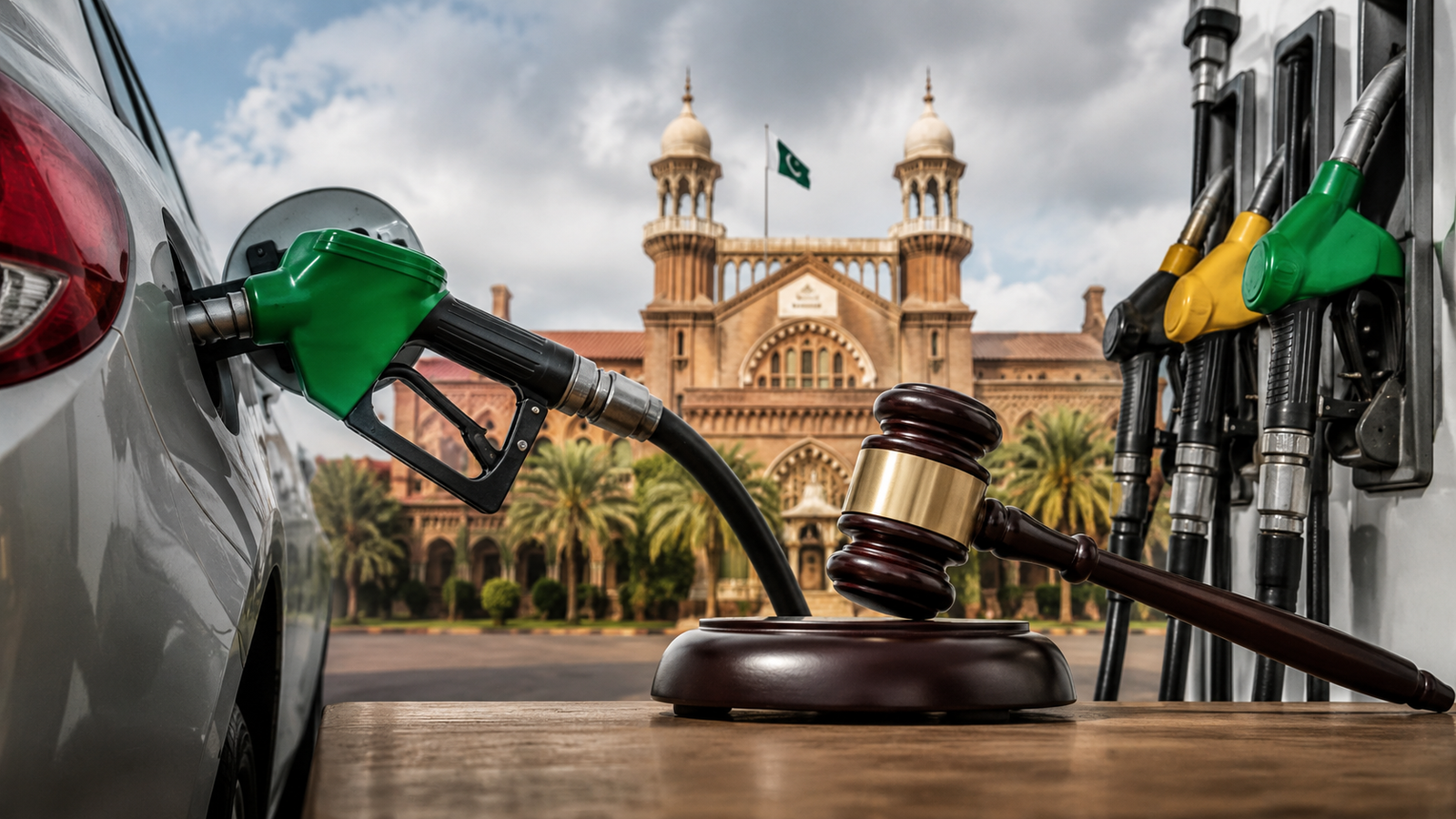
Lahore: A public interest petition has been filed in the Lahore High Court (LHC) against the federal government’s latest petrol and diesel price increase and its newly adopted policy of revising fuel prices on a daily basis.
The petition was filed by Azhar Siddique, Chairman of the Judicial Activism Panel (JAP), who has raised legal and constitutional objections to the mechanism now being used to fix petroleum prices over extremely short cycles of just one to three days.
Key Facts at a Glance
- Petitioner: Azhar Siddique, Chairman, Judicial Activism Panel
- Court: Lahore High Court
- Challenged: The July 17 price notification and the shift to daily fuel pricing
- Petrol: Rs310.71 (July 11) → Rs316.15 (July 17), up Rs5.44 per litre
- Diesel: Rs323.30 (July 11) → Rs354.35 (July 17), up Rs31.05 per litre
- Government’s stated reason: Renewed US-Iran hostilities disrupting global oil supply
- Relief sought: Suspension of the July 17 notification, an end to ad hoc daily/three-day revisions, and disclosure of the full pricing formula
Two Price Hikes in a Single Week
According to the petition, the Petroleum Division of the Ministry of Energy first revised fuel prices through a notification dated July 10. Under that notification, petrol rose from Rs297.53 to Rs310.71 per litre, while high-speed diesel increased from Rs309.50 to Rs323.30 per litre, with the new rates taking effect from July 11.
Barely a week later, the Petroleum Division issued a second notification on July 17, raising petrol by a further Rs5.44 per litre to Rs316.15, and diesel by Rs31.05 per litre to Rs354.35 — this time for a period of only three days.
The petition argues that these back-to-back revisions, coming within days of each other, point to a decisive shift towards daily or ultra-short-cycle fuel pricing, introduced, it says, without any publicly disclosed legal framework, statutory formula, or transparent methodology.
Why Is the Government Moving to Daily Pricing?
The shift follows an announcement by Petroleum Minister Ali Pervaiz Malik at a press conference on July 17, where he said fuel prices would now be fixed daily because of intensifying hostilities between the United States and Iran, which have disrupted shipping through the Strait of Hormuz and pushed up international oil prices.
Petrol and diesel rates in Pakistan had been revised weekly since early March, as the country dealt with sharp price swings tied to the wider US-Iran conflict. Diesel touched a peak of over Rs520 per litre and petrol crossed Rs458 per litre in early April, before easing in the months that followed.
Under the new arrangement, the Oil and Gas Regulatory Authority (Ogra) has been assigned responsibility for setting fuel prices daily, based on a seven-day rolling average of international rates. The government has said Ogra will publish both the daily rates and the underlying pricing factors on its website as part of a broader push towards deregulation and transparency, with a final decision on the long-term energy pricing framework expected within the coming weeks.
Petition Cites Constitutional Violations
The JAP’s petition contends that the new pricing mechanism violates several provisions of the Constitution, arguing that executive decisions taken without parliamentary oversight are placing arbitrary and unpredictable financial burdens on citizens.
It states that petroleum products are essential to transportation, agriculture, electricity generation, and industrial production, and that sudden or repeated price increases inevitably trigger wider inflation across the economy. The petition adds that the resulting burden falls disproportionately on consumers, farmers, transporters, traders, and small businesses already under financial strain.
Levy Allegations — and the Government’s Response
The petition further alleges that, under cover of these price revisions, the government has substantially increased the Petroleum Development Levy and the Climate Support Levy without disclosing the individual components used to calculate the final retail price. It claims this lack of disclosure leaves consumers unable to verify how much of each increase is driven by international oil rates versus domestic taxation.
Citing coverage in several national media outlets, the petition says the shift to daily or short-cycle pricing has generated widespread public concern about the legality, transparency, and fairness of Pakistan’s petroleum pricing regime.
The government disputes the characterisation that levies have been sharply increased, maintaining that current levy rates remain at or below pre-war levels and that the daily pricing move is intended to make the cost structure, including taxes, more visible to the public rather than less.
Reaction From Traders and Political Parties
The daily pricing policy has also drawn criticism outside the courtroom. The All Pakistan Petrol Pump Owners’ Association has rejected the proposed system, warning of possible protests and a strike if it is not withdrawn, and says roughly 15,000 petrol pump owners nationwide would be affected by the change.
Opposition parties have weighed in as well. The Pakistan Tehreek-e-Insaf (PTI) has called on the government to cut its own spending rather than passing the burden onto ordinary citizens, and has demanded a significant reduction in the petroleum levy. The Pakistan Peoples Party (PPP) has asked the Federal Board of Revenue to examine the profits earned by oil marketing companies rather than shifting the impact onto consumers.
Not all reaction has been critical. Some economic commentators have described the move to daily pricing as a reasonable response to unusually sharp volatility in global oil markets since the regional conflict escalated.
What the Petition Asks the Court to Do
The Judicial Activism Panel has requested that the Lahore High Court:
- Suspend the petroleum price notification issued on July 17
- Direct the government to stop making ad hoc fuel price revisions lasting only one to three days
- Order the government to publicly disclose the complete pricing formula and the legal basis used to calculate petrol and diesel prices
This is not the first time the JAP has approached the courts over fuel pricing. The panel has filed similar petitions after nearly every major price revision since March 2026, reflecting a sustained legal challenge to how Pakistan sets petroleum prices amid the ongoing regional conflict.
What Happens Next
The Lahore High Court is expected to take up the petition in the coming days and may issue notices to the federal government, the Petroleum Division, and Ogra for their response. Until a ruling is issued, the daily pricing mechanism — and the rates set under it — remain in effect.








Leave a Reply