

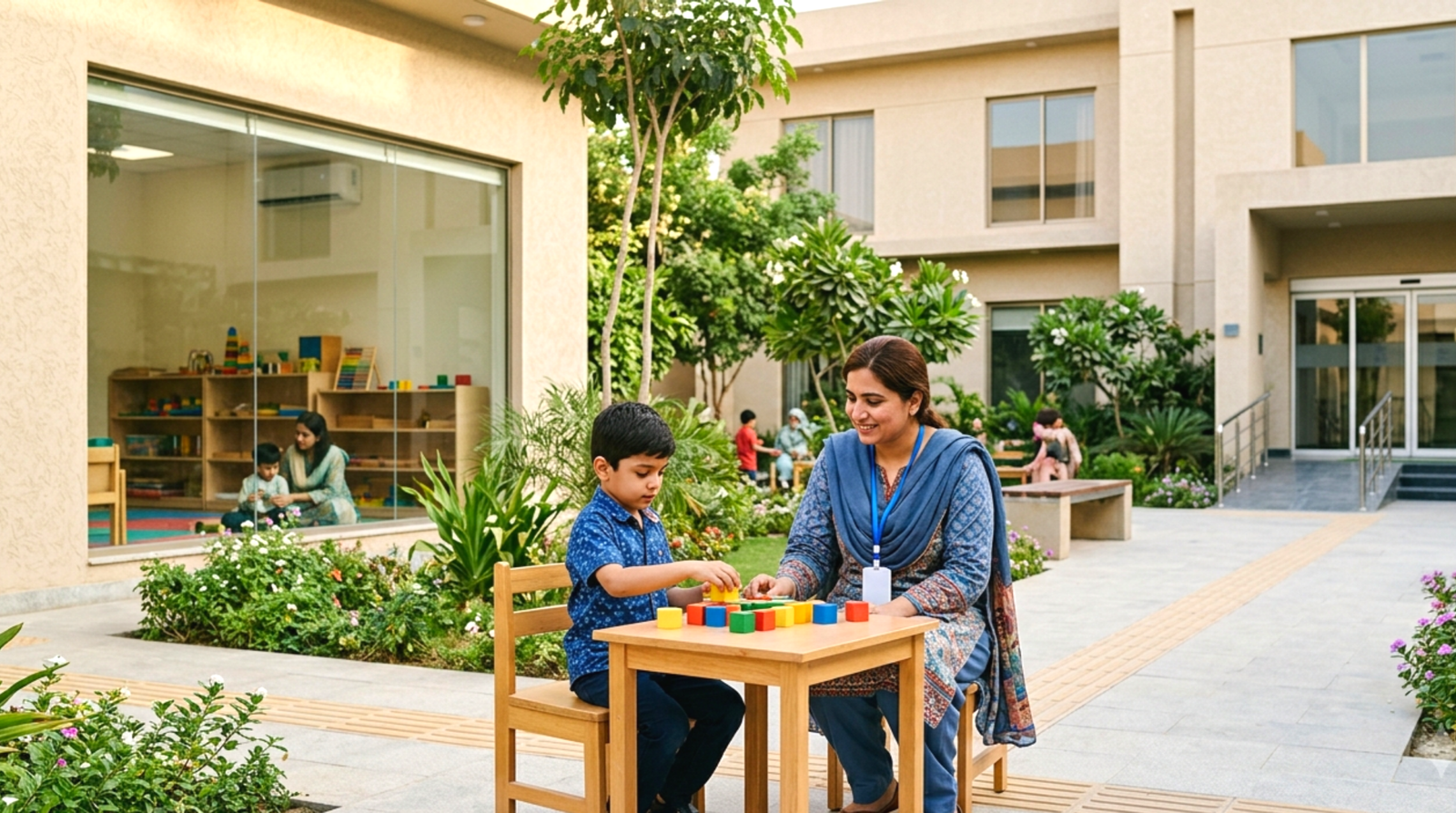
KARACHI: Sindh on Monday opened what provincial officials described as Pakistan’s first residential care institution built specifically for people with autism, extending a state-run network that until now had offered only day-time therapy and training.
C-ARTS Residential Opens in Karachi
First Lady Aseefa Bhutto Zardari and Sindh Chief Minister Syed Murad Ali Shah inaugurated the new unit, named C-ARTS Residential, on the grounds of the Centre for Autism Rehabilitation and Training Sindh (C-ARTS) in Karachi. Briefing the two dignitaries during the ceremony, centre officials said the addition marks a departure from the outpatient, session-based approach that C-ARTS and comparable institutions in Pakistan have relied on until now.
Officials said the new wing can house roughly 250 children at a time, combining overnight accommodation with the therapy, skills training and rehabilitation already offered at C-ARTS facilities. Part of the unit functions as a short-stay option for children with particularly difficult behavioural challenges, allowing their families a break from full-time caregiving duties. A separate, longer-term section is intended for autistic children who lack a guardian or relative able to look after them. Staff drawn from several clinical and educational disciplines will run the day-to-day programming, according to officials.
C-ARTS Portal Launched for Families
The first lady also used the visit to launch an online C-ARTS portal, meant to put information about the organisation’s services within easier reach of families across Sindh.
Aseefa Bhutto Zardari Highlights Inclusion
Addressing those gathered, Bhutto Zardari framed the expansion in broad social terms, saying a society’s treatment of persons with disabilities reflects how enlightened and caring it is, and that children with autism have as much claim to schooling and skill-building as any other child. She said all children with special needs were owed support and a genuine opportunity to develop their abilities, and that a society could not call itself inclusive if it left anyone behind.
Sindh Government Vows to Expand Special Education
Shah said his government would keep drawing on every resource available to support the rehabilitation and welfare of autistic people and others with special needs, and that helping persons with disabilities become valued, contributing members of the community remained a standing priority for his administration. He called C-ARTS a significant institution for improving outcomes among children with special needs and said his Pakistan Peoples Party-led government intended to keep expanding special-education and rehabilitation services. During the tour, the two officials met children enrolled at the centre, were shown examples of their progress, and heard from parents and specialists about their experience with the programme.
Residential Care Fills Major Gap for Families
For families raising autistic children with high support needs, the new unit fills a gap that Sindh’s day-centres alone could not: state-run accommodation for children requiring round-the-clock supervision, and a fallback option for those without family able to care for them. Formal choices for such cases have historically been scarce in Pakistan, with parents largely limited to keeping a child at home, arranging informal help, or paying for private facilities. C-ARTS has run its existing services free of charge since 2018, according to the organisation; if the residential wing follows the same model, it would mark the first time the province has extended free, government-funded care for autism beyond outpatient treatment.
C-ARTS Network Expands Across Sindh
C-ARTS was set up by the Sindh government in 2018 as a not-for-profit company registered under Section 42 of the Companies Act, 2017, and licensed by the Securities and Exchange Commission of Pakistan, with full ownership resting with the provincial government. Its original Karachi campus, in Gulistan-e-Jauhar, was built using a Rs71.7 million allocation approved in the 2016-17 provincial budget and was inaugurated by Shah in September 2018, when it was billed as the largest public-sector autism facility in South Asia, with day-programme space for roughly 300 children. Since then, the organisation has opened satellite centres in several Sindh cities, among them Hyderabad, Sukkur and Shaheed Benazirabad, as well as a separate facility catering to autistic adults, spreading services once concentrated in Karachi to other parts of the province. C-ARTS now falls under the Sindh government’s Department of Empowerment of Persons with Disabilities.
Irum Rizwan’s Role in Autism Services
Much of that expansion has been credited to autism specialist Irum Rizwan, who has led development of the C-ARTS network since its founding and who, in 2013, set up what is described as Pakistan’s first autism unit inside a teaching hospital, at Dow University of Health Sciences. In May, Sindh Governor Syed Nehal Hashmi conferred the Tamgha-i-Imtiaz civil award on Rizwan on behalf of President Asif Ali Zardari in recognition of that work.
Sindh and Punjab Clash Over Autism Facility Claims
Monday’s opening comes after a period of rival claims among Pakistan’s provinces over autism-related firsts. In February 2025, Sindh’s information minister at the time, Sharjeel Inam Memon, pushed back on a Punjab government assertion that it had opened the country’s first government-funded autism facility, arguing that Sindh’s C-ARTS network, dating to 2018, came years earlier. The federal government has pursued its own project separately: Prime Minister Shehbaz Sharif broke ground on a Centre of Excellence for Autism in Islamabad in December 2025, a Ministry of Federal Education initiative approved at a cost of Rs1.34 billion, with the completion timeline cut from two years to one. That project has been described by officials as centred on training, therapy and education rather than residential care.
Autism Prevalence Data Remains Limited
Nationally, reliable figures on autism prevalence remain scarce. The non-profit Autism Society of Pakistan puts the number of children with autism spectrum disorder in the country at roughly 350,000, though the estimate has not been confirmed through any official government survey.
What Happens Next
Sindh officials did not disclose a construction or operating budget for the residential facility at Monday’s event, nor did they set out an admissions timeline or eligibility criteria beyond the stated capacity. No further residential units were announced. The chief minister’s office repeated its broader pledge to keep expanding special-education and rehabilitation services, a commitment it has maintained since C-ARTS was founded in 2018. Given how steadily the network has added centres across Sindh since then, families and disability advocates in the province may look for signs of whether the residential model eventually spreads beyond Karachi, though officials have not indicated any such plans.







Leave a Reply