

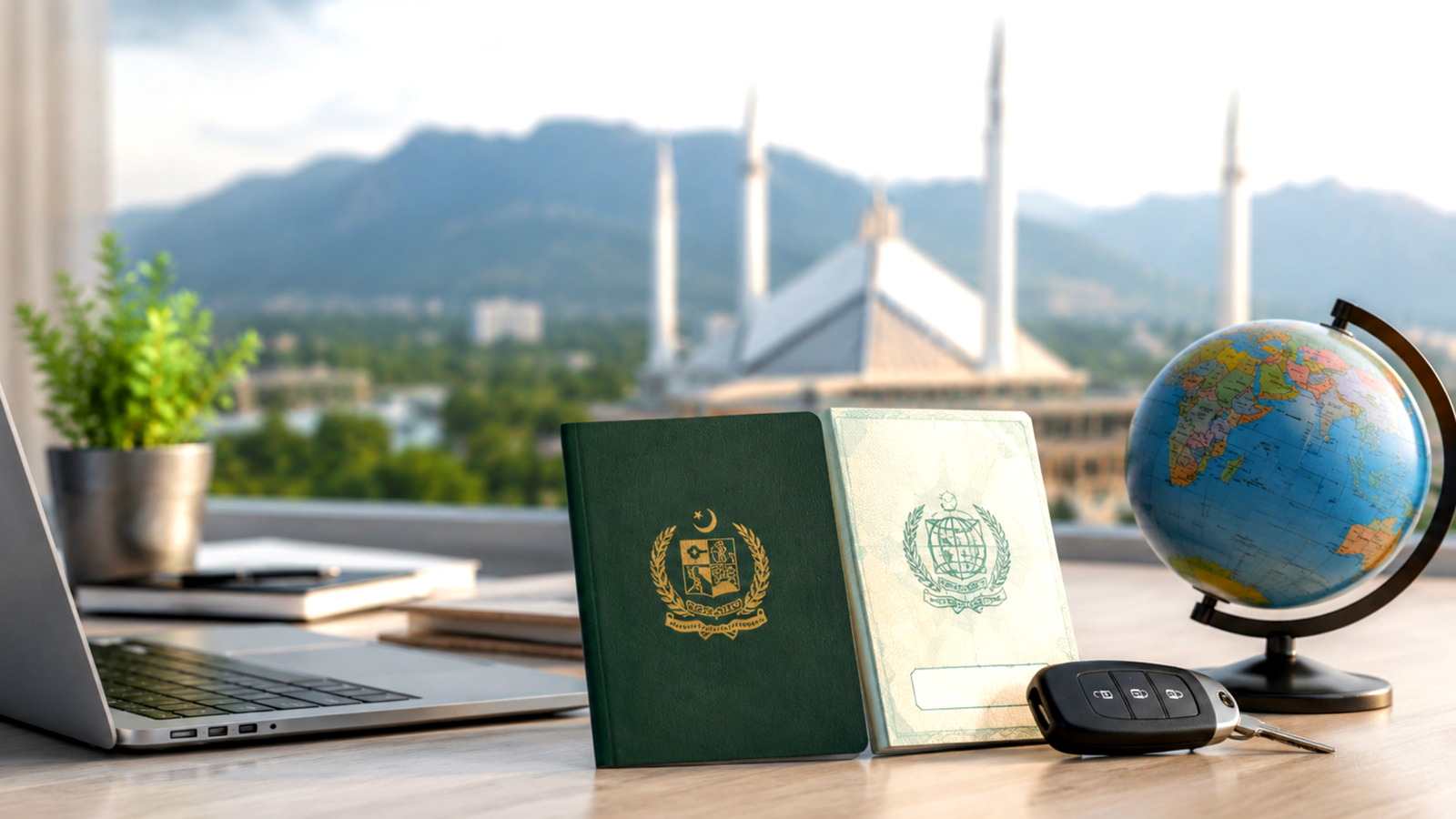
ISLAMABAD — Pakistan’s federal government has given in-principle approval to a single, nationwide online system for issuing Police Clearance Certificates, a move that would replace the inconsistent province-by-province process citizens currently navigate when applying for jobs, visas, and study programs abroad.
Interior Minister Mohsin Naqvi announced the decision Tuesday after chairing a high-level meeting at the National Police Bureau headquarters in Islamabad. Under the approved framework, the NPB — rather than Pakistan’s separate provincial police departments — will become the central authority responsible for issuing the certificate, formally known as a Police Character Certificate.
Naqvi also directed officials to draft a uniform national policy for International Driving Permits, a related travel document that Pakistanis currently obtain through provincial and city-level traffic authorities under processes that differ by region. He said standardizing both documents would simplify travel preparations for Pakistanis heading abroad, according to a statement posted by the Ministry of Interior.
What the Government Approved
Naqvi described the existing Police Clearance Certificate process as complicated and said it has been streamlined and converted into a fully digital system. Once the NPB’s online portal becomes operational, applicants are expected to be able to submit requests, upload supporting documents, track their application, and receive the finished certificate without visiting a police station or provincial facilitation center.
The certificate confirms whether an applicant has a criminal record and is one of the most frequently requested documents among Pakistanis pursuing opportunities overseas. It is typically required for:
- Employment applications, both in Pakistan and abroad
- Immigration and residency applications
- Visa processing for most destination countries
- Admission to foreign universities and colleges
- General international travel and other official purposes
Tuesday’s meeting also marked Police Martyrs Day, and Naqvi opened proceedings by paying tribute to police personnel killed in the line of duty before turning to the reform agenda, according to the ministry’s statement.
Why “In Principle” Matters
The approval Naqvi announced Tuesday was explicitly described as being granted in principle. That means the government has endorsed the concept and instructed the National Police Bureau to implement it, but has not yet published a public launch date, a portal web address, or a finalized fee schedule.
Officials have likewise not said how the transition will affect certificate applications already in progress under the old provincial system, or whether all six jurisdictions — Punjab, Sindh, Khyber Pakhtunkhwa, Balochistan, Islamabad Capital Territory, and Azad Jammu and Kashmir — will move onto the new portal at the same time.
Replacing a Fragmented Provincial System
Under the current setup, each province and territory runs its own Police Clearance Certificate process, with separate application forms, documentation rules, and fees. Punjab’s Police Khidmat Markaz centers, for instance, currently charge Rs500 for the certificate, according to recent reporting, while processing and delivery timelines vary elsewhere in the country.
Applicants have also generally had to route their request through the police jurisdiction tied to their permanent or previous residential address. That requirement has been especially burdensome for overseas Pakistanis, who often rely on relatives or an authorized representative carrying a signed authority letter to submit paperwork on their behalf. Centralizing the process under the NPB is intended to remove that geographic dependency, though officials have not detailed how identity and address verification will work under the new online system.
Documents Typically Required (Under the Current Process)
- Valid CNIC or NICOP
- Passport copy, particularly for visa or travel-related applications
- Recent passport-size photograph
- Affidavit, plus an authority letter for a representative if the applicant lives abroad
The National Police Bureau has not yet published its own document checklist for the centralized portal. The list above reflects how provincial police departments have generally handled applications up to now, and may change once the new system is formally notified.
International Driving Permits Face a Separate, Earlier-Stage Overhaul
Pakistan issues International Driving Permits under the framework of the 1968 Vienna Convention on Road Traffic, allowing licensed drivers to operate vehicles in many countries that recognize the document. As with police certificates, issuance currently runs through separate provincial and territorial systems rather than one federal channel.
In Punjab, IDP applications are processed through the province’s Driving License Issuance and Management System. In Islamabad, the Islamabad Traffic Police handles the permit separately through the ICT Administration. Requirements, processing times, and supporting paperwork can differ depending on where an applicant’s underlying driving license was issued.
Naqvi’s directive calls for a single, standardized IDP procedure nationwide. Unlike the Police Clearance Certificate initiative, which received formal in-principle approval Tuesday, the interior minister instructed officials only to prepare the new IDP policy — indicating that plan remains at an earlier planning stage, with no approved framework yet in place.
Part of a Wider Digitization Push
Tuesday’s announcement extends a series of moves by Pakistani authorities to consolidate citizen-facing government services onto digital platforms. In January 2026, officials inaugurated the Pakistan Asaan Khidmat Markaz in Islamabad, an integrated service center modeled on Azerbaijan’s ASAN public-service system that brings NADRA registration, passport and immigration processing, police character certificates, and other government functions under a single roof.
That center, together with NADRA’s ongoing expansion of its e-Sahulat network, reflects a broader push to reduce the number of separate offices citizens must visit for routine documentation. Tuesday’s decision extends that logic to a federal level, shifting authority over character certificates from scattered provincial offices to one national bureau.
What It Means for Applicants
For Pakistanis living overseas, along with students and job seekers preparing to travel, a fully functioning national portal would remove a persistent bureaucratic obstacle from visa and immigration paperwork. It would be particularly useful for applicants whose permanent address is far from where they currently live, since they would no longer need a relative or representative to visit a specific district police office in person.
Until the NPB formally launches the new portal, existing provincial procedures remain the applicable channel. The interior ministry has not announced a transition date, and citizens with pending visa or travel deadlines should continue applying through their relevant provincial police department or facilitation center until the Bureau issues further guidance.
Employers, immigration consultants, and educational institutions that request the certificate as part of standard documentation will also need to watch for the transition, since the issuing authority and verification process are both set to change once the new system takes effect.
What Comes Next
Neither a launch date for the National Police Bureau’s online portal nor a timeline for finalizing the International Driving Permit policy has been made public. Both initiatives will require coordination with provincial police departments, which currently retain operational control over record checks and verification.
The interior minister described transforming the National Police Bureau into a more active, technology-driven institution as a broader priority beyond Tuesday’s specific announcements. Further details — including the certificate’s final fee structure, required documents, and expected processing time — are expected once the system is ready for public rollout.






Leave a Reply