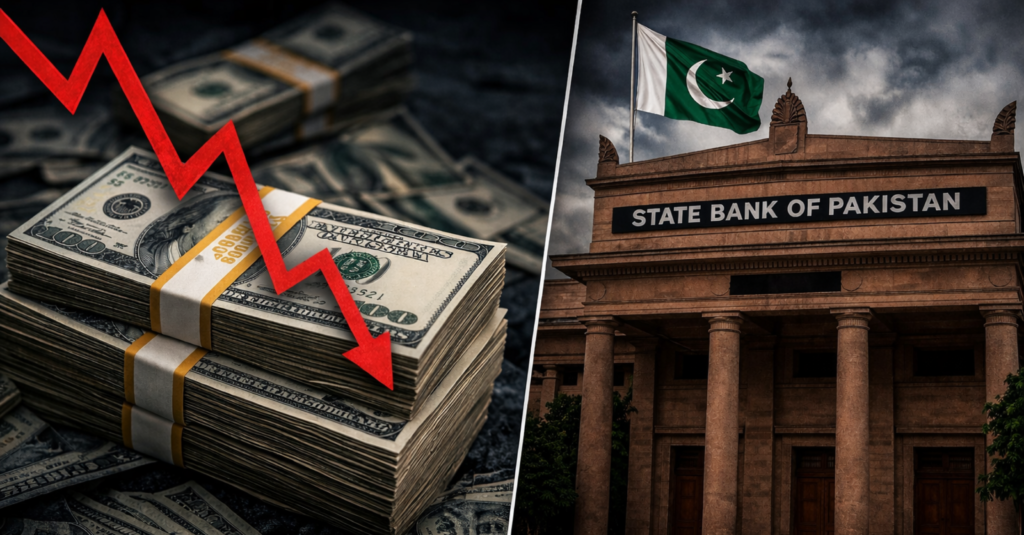
Pakistan is expected to face significant external financing pressure in April 2026, as a heavy foreign debt repayment schedule threatens to reduce the country’s foreign exchange reserves very sharply.
According to available estimates, Pakistan will need to repay around $5.3 billion in external obligations during April alone. This amount represents nearly one-third (33%) of the State Bank of Pakistan’s (SBP) current reserves, raising concerns about short-term liquidity and economic stability.
Heavy Repayment Burden Ahead
The repayment schedule includes major outflows such as a $1.3 billion Eurobond maturity and multiple repayments to the United Arab Emirates (UAE). Reports confirm that Pakistan is already set to repay at least $3.5 billion this month, including UAE deposits and Eurobond obligations.
These large payments are expected to significantly drain the central bank’s reserves within a short period, making April one of the most challenging months in recent years for Pakistan’s external reserves.
April 2026 Debt Repayment Schedule
- April 8: $1.3 billion (Eurobond maturity)
- Mid-April: Around $2 billion repayment to UAE
- Later in April: Additional $2 billion in UAE-related repayments
Combined, these outflows are estimated to reach approximately $5.3 billion.
Current Reserve Position
The latest data shows that Pakistan’s foreign exchange reserves remain relatively stable for now but offer limited cushion against such large outflows.
- SBP reserves: $16.38 billion
- Total liquid reserves: $21.79 billion
- Commercial banks’ reserves: $5.41 billion
Despite a small weekly increase of $6 million, the reserves are still vulnerable to external payment shocks.
Economic Implications
The expected drawdown highlights Pakistan’s continued reliance on external financing and the pressure of servicing foreign debt. A sharp decline in reserves could:
- Put pressure on the Pakistani rupee
- Increase dependence on friendly countries and IMF support
- Limit the country’s ability to manage imports and stabilize markets
While the government has managed to maintain relative stability in recent months, April’s repayment burden will be a key test for Pakistan’s financial resilience.
Conclusion
With billions of dollars in repayments due within weeks, Pakistan’s external position is moving towards a critical phase. The anticipated decline in SBP reserves underscores the importance of sustained inflows, policy discipline, and external support to maintain economic stability.